I will never forget him though he has been gone since 2002. He made me believe in the resilience of the human spirit. He made me believe in miracles. It was in 1991. I had run into my friend, Ernie Hollander, in the produce aisle of the Safeway on Redwood Rd. in Oakland, where we both shopped. I was in my early forties, a busy mom of three daughters working part time in our family business and an active community volunteer taking leadership positions in a number of organizations. I was expecting my usual bear hug and kiss on the cheek with maybe some playful teasing. Ernie, in his late sixties then, was a powerfully built man, quick to smile and always a flirt. He was bubbling over with excitement and had something important to tell me right then and there which could not wait a minute.
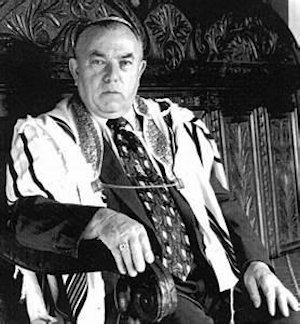
Ernie and I worked closely together at our synagogue for a number of years where I was
part of a cadre of young leaders, the up and coming generation so needed to put life back into a synagogue where many of its members were getting older and programs for young families were sorely lacking. I served as chair of the membership, program, and religious school committees also chairing many fundraising events. Eventually I became president, the first woman in the hundred-year history of my Orthodox synagogue, so it was kind of a big deal.
Like many members of our congregation, Ernie and his wife Anna had survived the Holocaust though they had both lost most of their families. On the holidays when the special Yizkor memorial prayer, was recited, I would peruse the Yiskor book and see dozens and dozens of old world names, the mothers and fathers, brothers and sisters, and grandparents lost in the Holocaust. We also had a memorial wall in our synagogue with names engraved on metal placques because there were no real graves for their relatives to visit. Their families’ remains were scattered in the winds of the concentration camps, ephemeral monuments.
They were part of a group we called the “survivors” though they called themselves the greenas, short for Greenhorns. Though this could be construed as a pejorative name, they used it affectionately amongst themselves. Many had tattooed numbers on their arms, the cruel reminder of their nightmare days and years spent in concentration camps which I would see when a sleeve was inadvertently raised or rolled up. Seeing those inked numbers never failed to shock me. They were a tough, indefatigable, competitive bunch with incredible stories of how they made it through years of labor and concentration camps with tales of sheer luck and unbelievable quirks of fate. They were strong, very opinionated and had been through so much in their lifetimes they could overcome most obstacles. Many were successful in whatever businesses they opened. They started from nothing and created new lives. They were also incredibly generous and hospitable. I learned so much from them.
Ernie and Anna lived in small neighboring towns, in what was then Czechoslovakia in the Carpathian mountains. Ernie’s family name was originally Albergezie, and they were Sephardim which signifies they originated from the Iberian peninsula. As many Sephardim, they had left Spain at the time of the expulsion in 1492. First they fled to Holland, and then, made their way to Eastern Europe, where their name was changed to Hollander to reflect their soujourn in Holland. Ernie’s father was a rabbi, and there had been a rabbi in every generation of his family from the Inquisition to the Holocaust. His parents owned a mill which ground grain into flour and olives into oil. His mother was a twin and the two sisters had 15 children between them. Ernie was one of eight.
During the war he had been sent to various labor camps then to Auschwitz. Of his fifteen cousins, he had assumed that only he and his brother Alex had survived. His own father was killed before his eyes and he saw his mother and three younger sisters being led away. He never saw them again. He heard his older brother Zoltan ‘s body had been seen being cut from a tree in a forest after German soldiers hanged him at the end of the war. Ernie had lived with the thought for all these years that he was dead like his parents and other siblings.
Ernie immigrated to pre-state Israel in 1946. Anna made her way there separately, and they were to be reunited through amazing coincidence. They fell in love and quickly decided to get married. On the eve of Israel’s statehood, the night the United Nations voted for partition, these hopeful teenagers, with just three dollars between them, married on a rooftop in Haifa with bullets whizzing all around. The wedding party, all twelve guests, were feted with one roll each which Ernie managed to hoard for a week from his bakery job. They shared their wedding night in their one-room apartment with the guests who could not leave because fierce fighting had broken out.
Some years later, the young couple, hoping for a bright future for their infant daughter moved to Brooklyn. They stayed there a few years and their son was born, but they found their ultimate home in Oakland. Ernie had owned the Grand Bakery in Oakland, making superb challah and Hungarian strudel. He left the grueling bakery business after some years to try something new and became a scrap metal dealer.
At the synagogue, his second home, Ernie filled in as the volunteer “Gabbai” or sexton, who helped run services, opened the doors at 6 in the morning and was often the last to leave in the evening after services. His devotion to the synagogue was boundless. Ernie was a legendary cook, and with Anna they whipped up fantastic community dinners for the Sabbath. They also opened their home to most of the synagogue membership at one time or another for Sabbath and holidays, epitomizing the words gracious and hospitable. No one could resist the rich soups, mouthwatering brisket, stuffed cabbage, roasted chicken and delectable pastries. Anna’s specialty was a chiffon cake, maybe fourteen inches high that was light and delicious.
However the highlight of the dining experience was sitting around their long table after dinner and hearing spellbinding stories of how they survived the war years, made their way to Palestine and met there again by chance. They did so much for the children of our synagogue. Besides their two children, they counted many more as their own as Ernie ran the youth group. He traveled with teens to retreats all over was their mentor. The teens adored him. Ernie also never failed to bake a huge sheet cake for the Bar and Bat Mitzvah celebrations of our synagogue children. Ernie posing with the kid and the cake was a classic photo appearing in countless family albums.
He felt deeply that the lessons of the Holocaust needed to be taught, and he shared his experiences often at high schools, colleges and churches all around California. Audiences were mesmerized by his stories and felt empowered by his example of courage. He would convey the lessons of the Holocaust to teach youth especially that they had it in them to stand up to prejudice. He was a powerful speaker and left a lasting impression on his audiences. He had hundreds of thank you letters from children and adults and commendations from countless civic groups.
When he got an invitation to appear on the “Montel Williams show” to debate a revisionist historian, he almost did not go. He felt that even to appear on a program with a Holocaust denier gave legitimacy to their absurd claims. However some of our community members and even our rabbi urged him to go and tell his story.
Ernie did appear on the TV program, and it was broadcast all over the country. He was just happy that he was able to put that Holocaust denier in his place. The audience must have agreed as they gave Ernie resounding applause. By chance, in New York that day, but one could question if it was by chance, there was a young man named Zika sitting on his couch flipping through the channels. He was home from work because the regular babysitter couldn’t come and his child was sick and his wife, a medical intern, had to be at work. When he looked at the Holocaust survivor on TV and heard his story, he rubbed his eyes in disbelief.
It can’t be! he thought. This man from California is the spitting image of his parents’ neighbor in Serbia, Zoltan Hollander. He was struck by the striking resemblance. He could not get this uncanny coincidence out of his head. Zika picked up the phone and called the number for the Montel Williams show. He tried to convince the producers of the show that the impossible had happened and that Ernie’s long lost brother Zoltan was still alive! The Montel Williams show hung up on Zika. They were used to calls by crazies just wanting money or fame, but Zika would not give up.
As it happened, he was flying to Serbia to see his mother and immediately went to tell Zoltan in person about the man named Hollander from California who looked and even sounded just like him. Zoltan was indeed a Holocaust survivor, and had been hanged but managed to get loose, fall between the trees play dead and escape into the forest. He spent years living in Siberia eventually going to Serbia. Zoltan lived under the assumption his entire family; parents, and seven brothers and sisters had perished and had no idea he had two living brothers and extended family still alive. He had rebuilt his life in Serbia as a printer and had two grown sons of his own. His wife had recently died.
Zoltan gave Zika the names of his grandparents, parents, brothers and sisters along with their birthdays. When Zika returned to New York, he mailed that information to the Montel Williams show. After receiving the letter, someone from the show telephoned the Hollanders in Oakland. Ernie wasn’t home but they reached Anna. She couldn’t believe the news. After all, for years there was a memorial plaque in our synagogue with Zoltan and his parents and other brothers and sisters names on it. Anna called our rabbi to ask what she should do. She didn’t want to give Ernie false hopes or a heart attack. Our rabbi told her she had to tell Ernie but advised she should not be alone. Several neighbors, also survivors, came over to be with her. When he finally came home, she told him to sit down because she had some good news for him. Then she ran to the kitchen sobbing. Ernie followed her and put his arms around her. “Honey, why are you crying and why do I have to sit down?”
She told Ernie the amazing news and everyone in the room was crying. Ernie was laughing and crying. He picked up the phone and called Serbia. For the first time in fifty two years he spoke to his brother whom he called Heshie, his Yiddish name. At first they quizzed each other back and forth to be sure they were really brothers. This is where the story picks up in the produce department.
“Joanne I have to tell you a story. I spoke to my brother. I’ve been saying kaddish (the memorial prayer), for him for all these years. He’s alive. Can you believe it?” There is a Yiddish expression that something can be bashert…ordained, that it was meant to happen. There is no doubt in my mind. You could call it serendipity, I call it a miracle. After I heard the whole rushed story, we both cried right there in Safeway. To me when I thought about it, it felt like all the years of good deeds that Ernie had done for our community and especially for our children and how he told his story over and over to hundreds of students was somehow being rewarded.
Ernie and Heshie spoke on the phone every day until the Montel William show flew Heshie and his two sons to New York all expenses paid in order to televise the reunion on live tv. We were all spellbound watching the reunion though thankfully they had the real first meeting off camera then had the “tv” reunion for the audience. It would have been just too much of an emotional shock for the brothers. Anna sat next to Ernie telling her part of the story to Montel Williams then Ernie spoke and finally Zoltan came out and everyone hugged and cried. There was not a dry eye in the house. After the show, Zoltan and his sons would join Ernie and Anna in Oakland for an extended visit.
A big crowd from our synagogue carrying signs and balloons greeted Heshie and his sons when they arrived at SFO, and he became quite the celebrity. He had a twinkle in his eye just like his brother and even though he barely spoke English it didn’t matter. We all felt that he was a member of our extended family.
The sons returned to Serbia but Hehsie stayed for months though eventually went back also. Ernie and Anna continued their good works until we lost Ernie too soon, in his seventies, to pancreatic cancer. Anna also died too soon. I can never forget them.
 Joanne Jagoda